Barometer
Barometer History
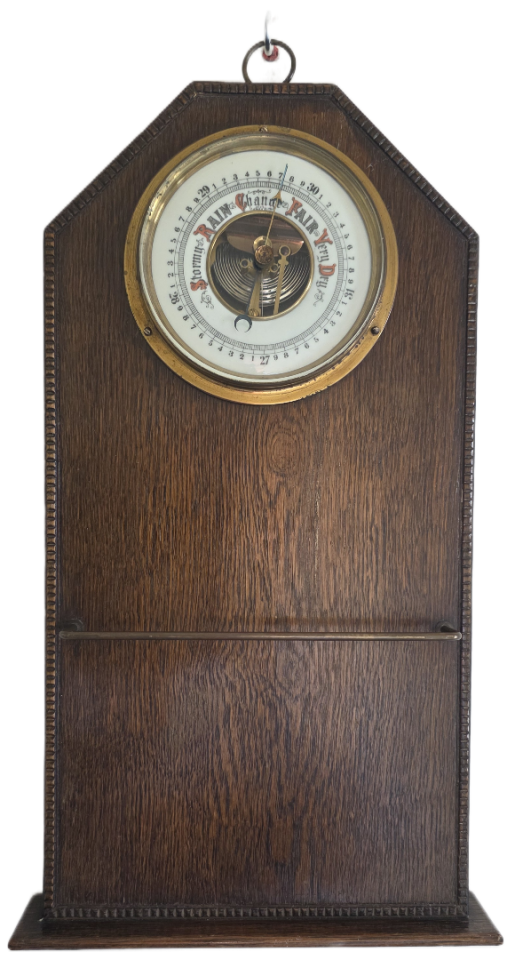
The barometer was invented by Italian physicist and mathematician Evangelista Torricelli in 1643, who created the first mercury barometer by inverting a mercury-filled glass tube into a dish of mercury, demonstrating that air has weight and pressure, a concept later expanded upon by Blaise Pascal.
Aneroid Barometers
An aneroid barometer is a type of instrument used to measure atmospheric pressure. The name “aneroid” comes from the Greek words “a-” meaning ‘without’ and “nēros” meaning ‘liquid’. This name came about because all previous barometers used either mercury or water to measure changes in pressure. The invention of the aneroid barometer in 1844 by French scientist Lucien Vidi was a significant advancement from the traditional mercury barometer, as it is smaller, more portable, and more durable.
Met office aneroid barometers used in various weather stations around the uk
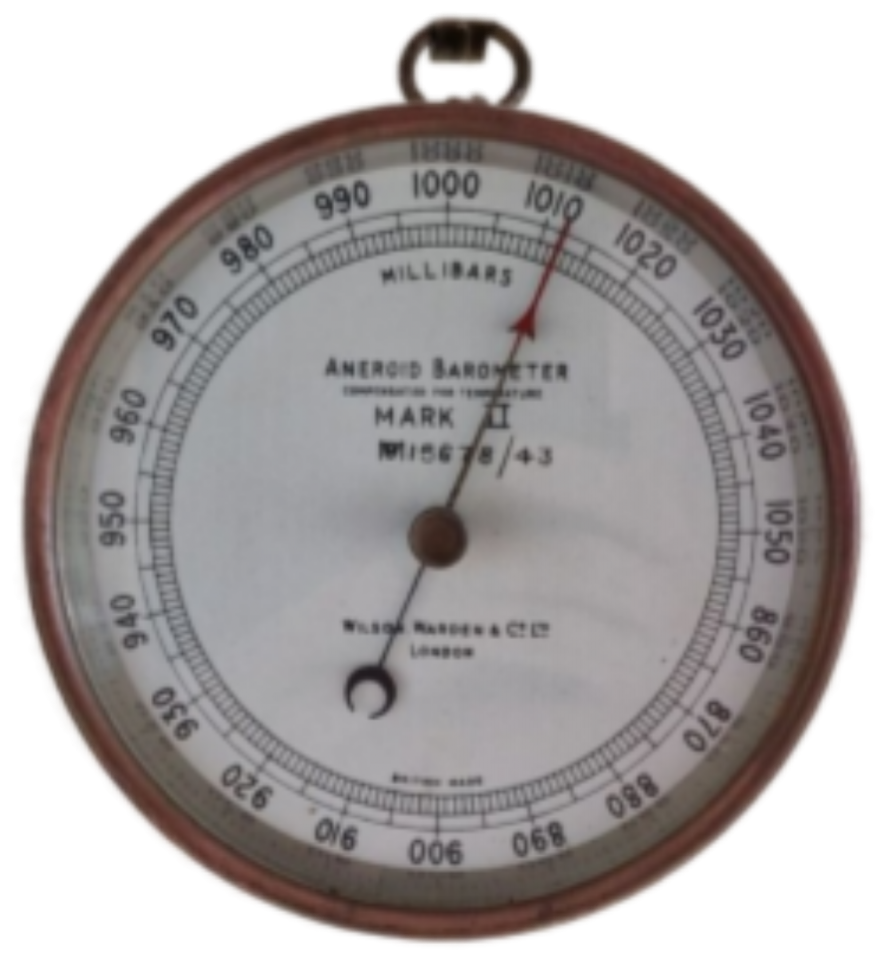
1943
Pocket Barometers
Admiral Fitzroy & Negretti & Zambra Associated with producing the first popular pocket-sized aneroid barometers, shaped like pocket watches, for widespread use.
The first pocket barometers were produced in the early 1860s.
The development of pocket barometers progressed rapidly after the 1870s.
The Negretti and Zambra company, which was active from the 1850s to around 1935.
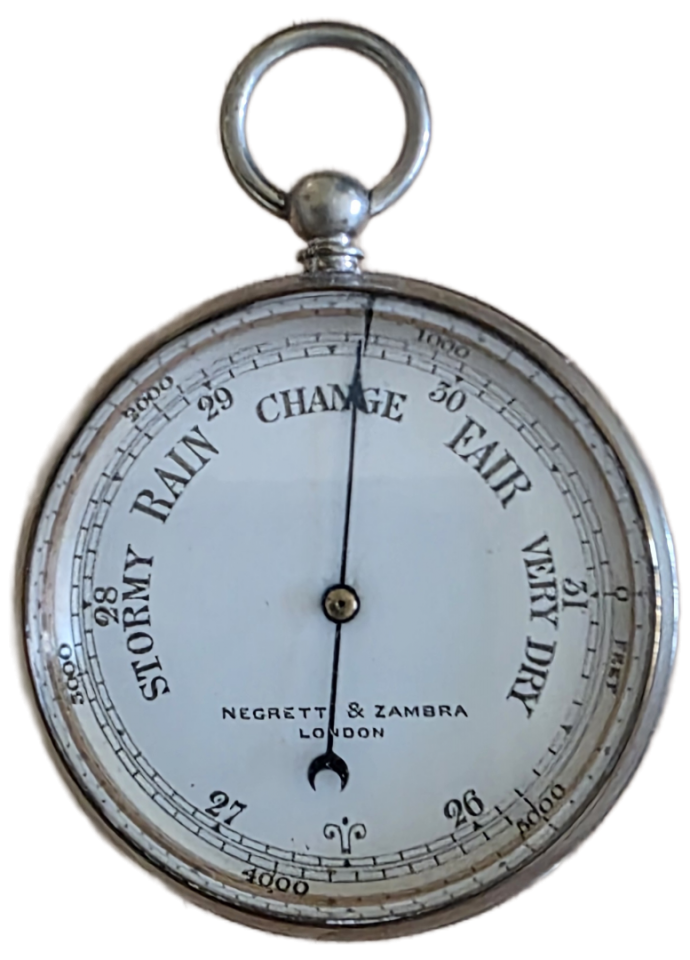
J. Hicks & Others (late 19th Century): London instrument makers like James Joseph Hicks (J. Hicks) produced many well-known, compensated pocket barometers, often with altimeter functions for mountaineers.
How to Read ChangesRising Pressure: Indicates that good, dry, and cool weather is on the way.Falling Pressure: Signals the approach of a low-pressure system, which usually brings clouds, rain, or wind.Rapid Drop: Often a warning sign of an incoming storm or severe weather front.
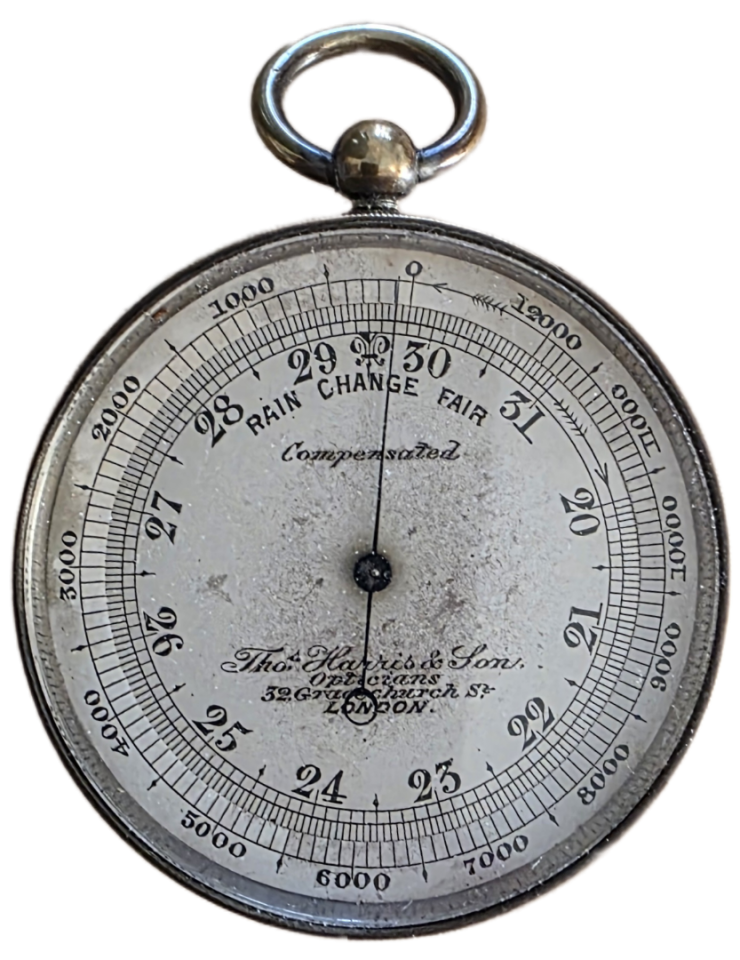
Pocket Barometers, Victorian men typically wore them in their waistcoat pockets on a chain.